Skip to contentCarlos Rosão

I have loved astronomy my whole life. It is the reason I studied physics: I wanted to understand what I was looking at. I never ended up working in the field, but the passion never left, and it kept me reading, looking up, and following every mission and every discovery along the way.

In the last year a telescope brought it all back. Now, on clear nights, I point it at a nebula, a galaxy, or the Moon, and see what comes out. These are some of the results: the objects I have spent a lifetime reading about, finally in my own frames.

The frames nebulae, galaxies, the Moon, and the Sun
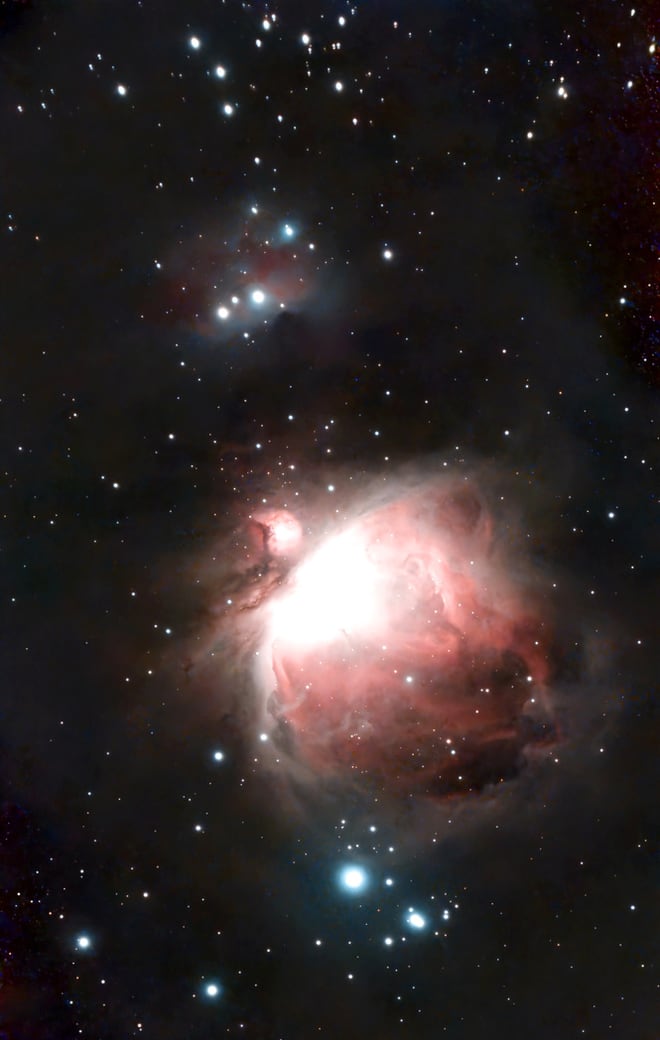
  • The Orion Nebula: a bright pink and white cloud of gas with dark dust lanes, the smaller Running Man Nebula above it, on a starfield.
    Orion NebulaM 42
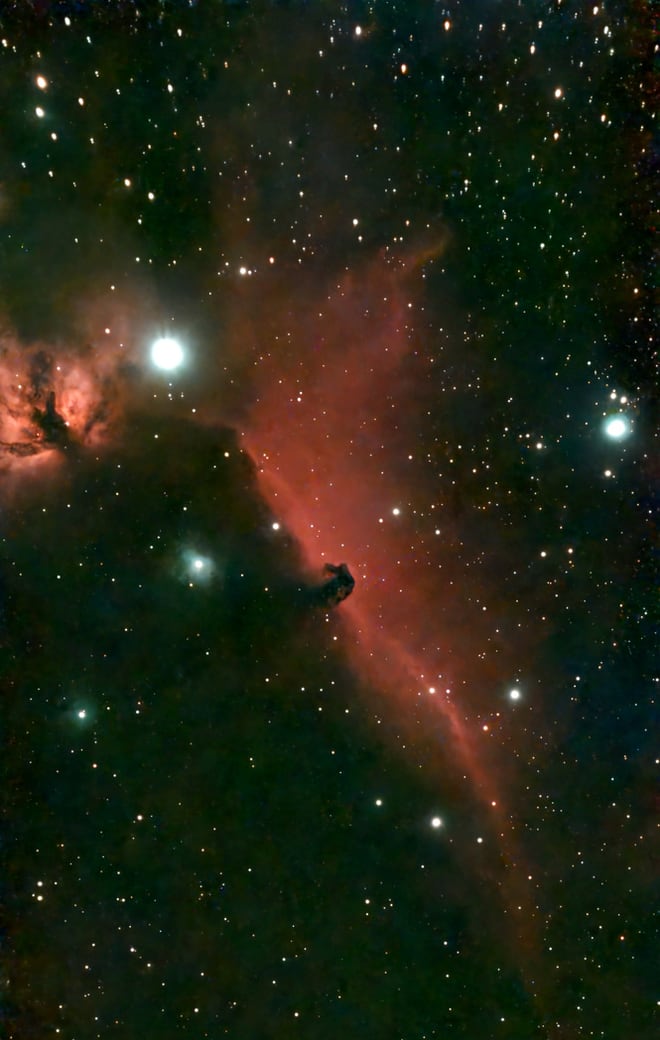
  • The dark Horsehead Nebula silhouetted against a red curtain of glowing hydrogen, with the orange Flame Nebula beside the bright star Alnitak.
    Horsehead and Flame NebulaeIC 434 · NGC 2024
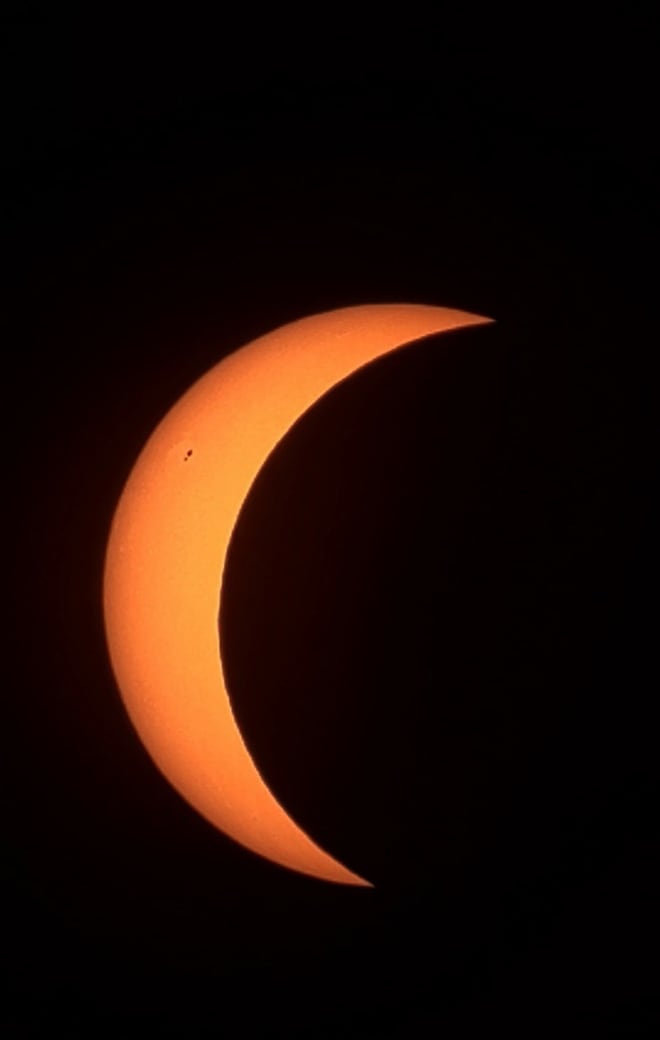
  • The Sun as a thin orange crescent, most of its disc hidden by the Moon, with a small sunspot near the limb.
    Partial solar eclipseSun
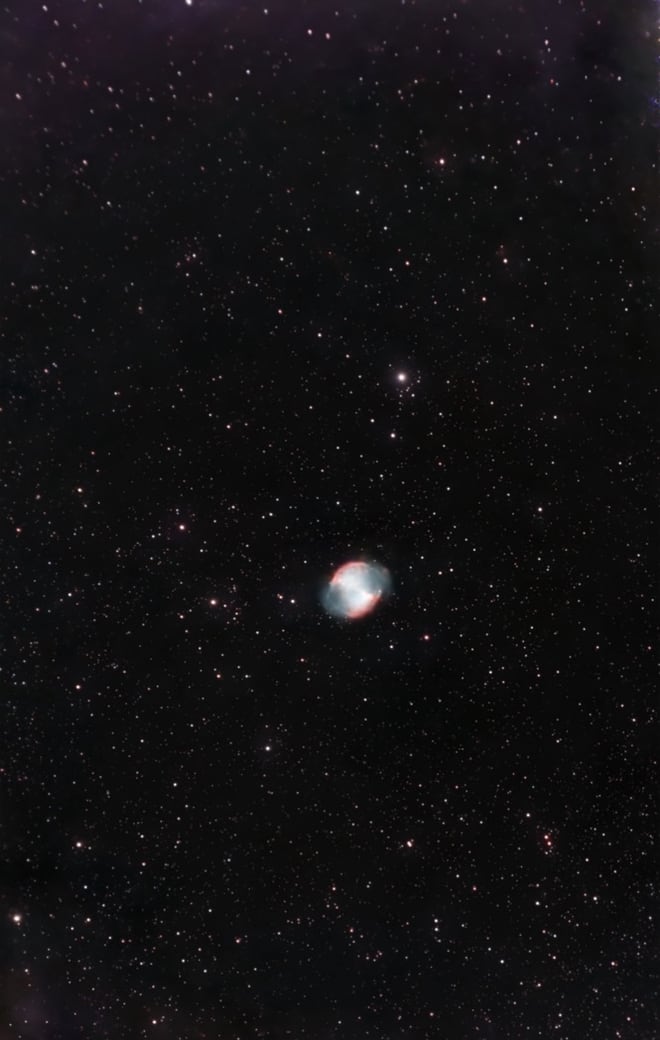
  • The Dumbbell Nebula: a small, bright blue and pink planetary nebula shaped like an apple core, alone in a dense starfield.
    Dumbbell NebulaM 27
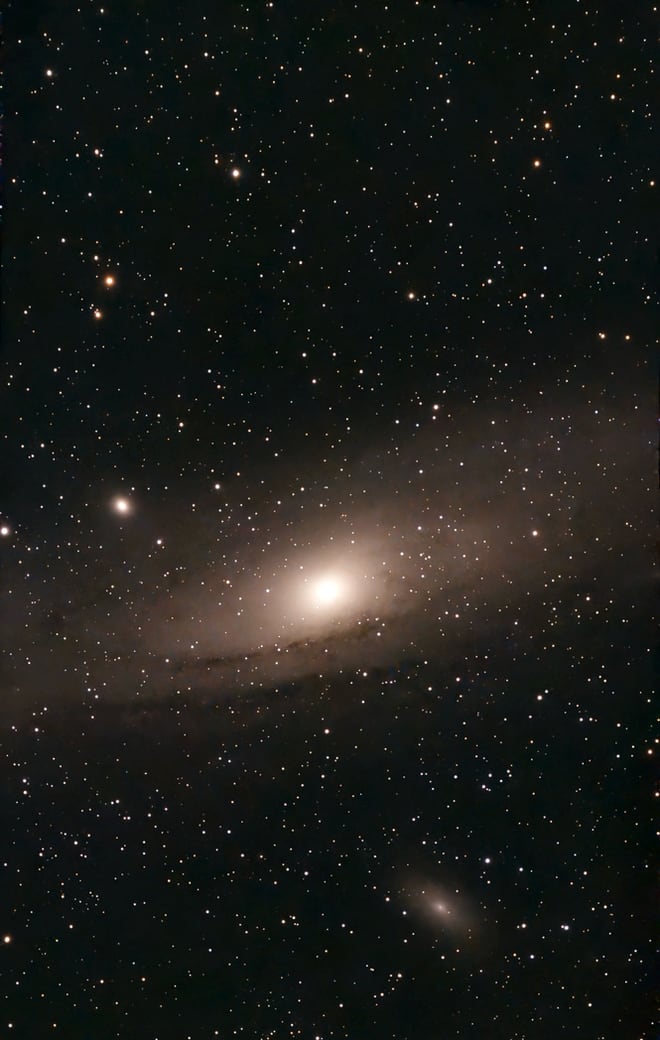
  • The Andromeda Galaxy seen nearly edge-on, a bright yellow core with a dark dust lane across its disc, and its two small companion galaxies nearby.
    Andromeda GalaxyM 31 · M 32 · M 110
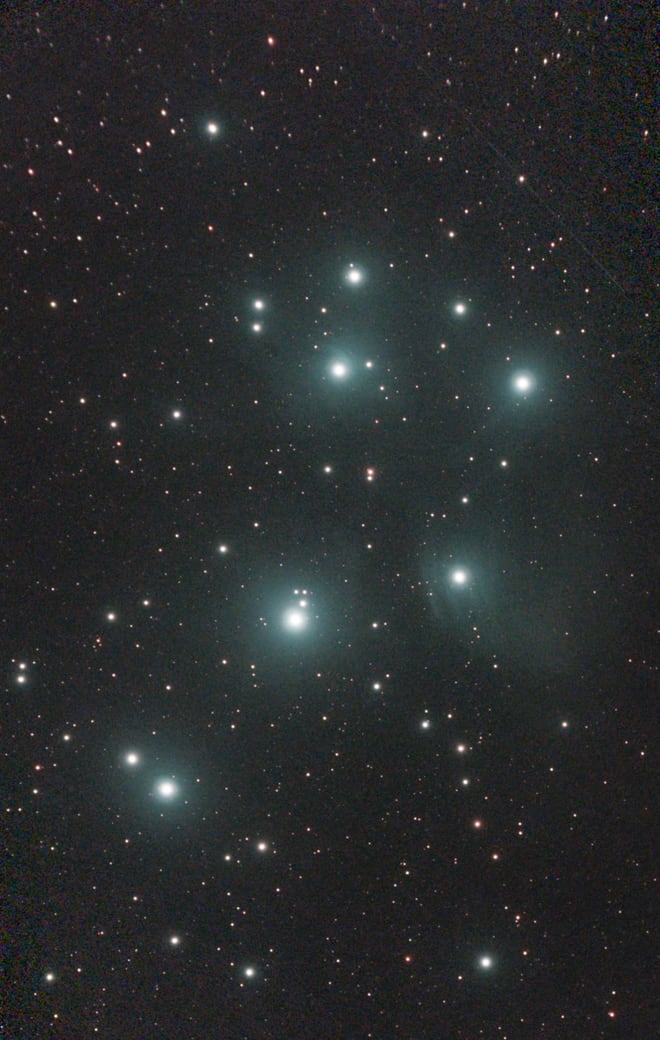
  • The Pleiades: a cluster of bright blue-white stars wrapped in faint blue reflection nebulosity.
    PleiadesM 45
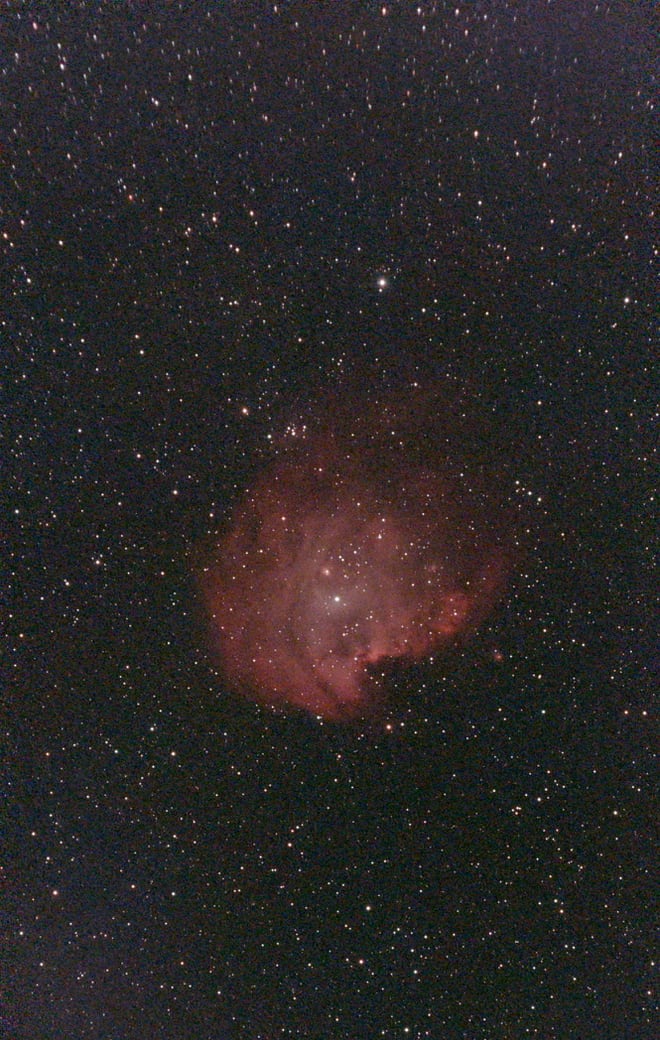
  • The Monkey Head Nebula: a round, mottled red cloud of glowing hydrogen with a cluster of young stars inside it.
    Monkey Head NebulaNGC 2175
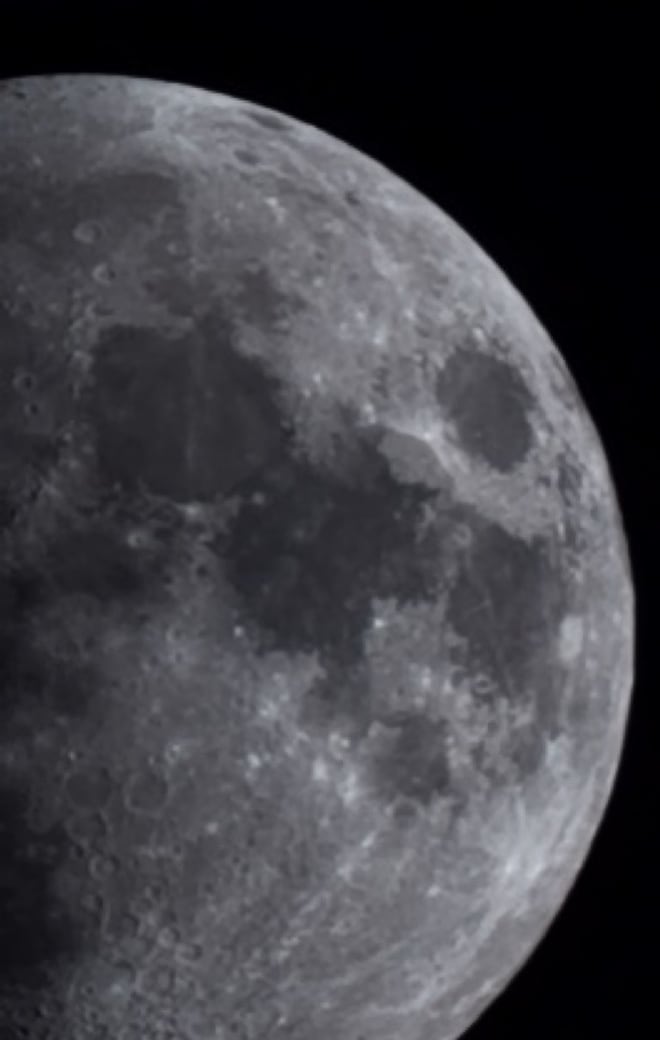
  • A close view of the waxing gibbous Moon, its grey maria and bright cratered highlands sharp against black sky, the terminator on the left.
    Waxing gibbous MoonMoon

All photographs © Carlos Rosão. All rights reserved.